
Population timebomb: ageing UK set to squeeze jobs and growth
30 April 2026
·
Liz Barclay
Share:
Britain is heading into a demographic shake-up that could quietly redraw the economy. Fewer babies, falling migration and a rapidly ageing population are converging to create a tighter workforce, rising costs and growing pressure on public services. For small businesses, this isn’t abstract policy—it’s the reality of harder hiring, shifting customers and a tougher trading landscape already taking shape.
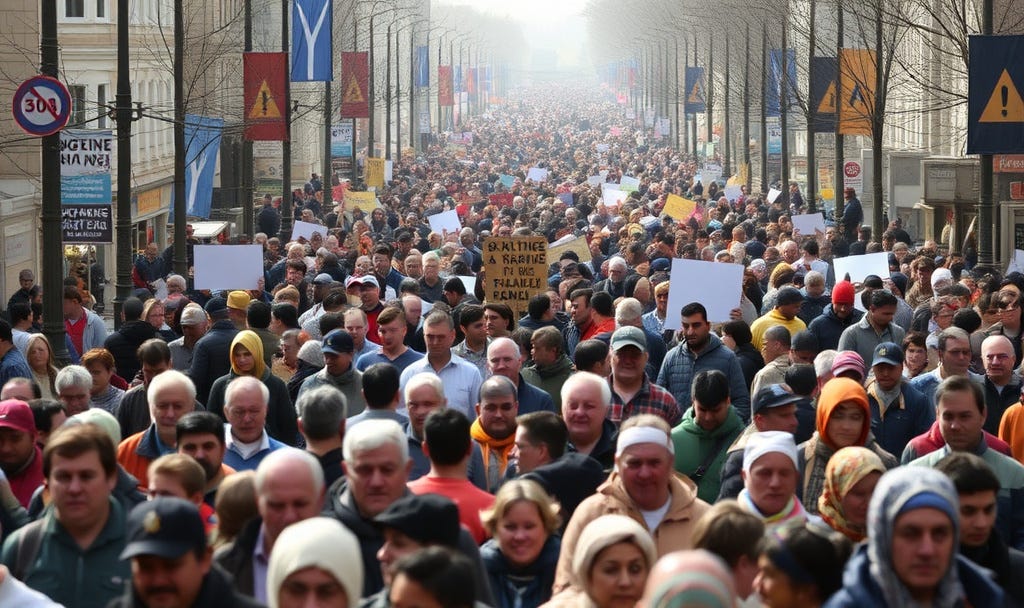
population
The UK is heading for a population shake‑up like we’ve never seen before. Small businesses are being warned it could hit the workforce, the economy and public services for decades.
New official figures show the UK’s population will rise to 71 million by 2034, but every bit of that growth will come from net migration, not new births. The ONS says births will fall below deaths this year, something that hasn’t happened in more than a century.
BABY BUST BRITAIN
Since 1900, Britain has always had more babies born than people dying. But in 2025, births only just scraped ahead by 2,000. And now the gap is about to flip. The 660,000 births in 2024 are expected to fall below 600,000 by 2056
It’s too early to say whether this is a temporary “baby pause” or a long‑term trend but currently the direction is down.
Net migration is now the sole driver of population growth. But even that is dropping. It’s forecast to fall to 138,000 in 2026 and settle at 230,000 a year in the longer‑term. That’s 110,000 lower than previous projections and reflects big falls in immigration since 2023.
Lower migration is a stated government aim but it comes with consequences.
If we have fewer workers we will also have a smaller economy.
Lower‑than‑expected migration by 2030 means 63,000 fewer workers, and economy that is 0.2% smaller and around £3 billion less in tax revenue.
Any savings from lower demand for public services only help if government spending is cut, otherwise the gap widens. With the public finances already under pressure from global events, analysts say this adds another challenge.
Fewer babies and lower migration also mean Britain is ageing faster.
Between 2024 and 2034:
People at state pension age will rise by 1.8 million
Fewer working‑age people will be paying tax
More people will be drawing pensions
NHS and social care demand will surge.
The Resolution Foundation says demographic change already explains half of the rise in health spending since 2010. Healthy life expectancy has fallen by two years in the past decade according to recent figures from the Health Foundation and now sits below state pension age in 90% of local areas. An older population that is also less healthy means more pressure on hospitals, GPs and care services.
For small and micro businesses, this means tighter labour markets, higher costs, shifting customer demand and more strain on the public services we rely on. If fewer young people are entering the labour market we can expect to find it more difficult to recruit, to have to compete on wages and skills with bigger firms better able to pay more. There will also be more pressure on small firms to train staff themselves which adds to small business costs.
The sectors that are likely to be hit hardest are those that need younger people such as hospitality, retail, care and construction.
With fewer workers paying in and more pensioners drawing out, the tax burden may shift. That could mean higher taxes on businesses with higher National Insurance, less government support for small businesses and more pressure on the local services businesses rely on.
An older population means the customer base will also look different with more demand for health, care, mobility and home‑based services and less demand for childcare, youth services and some retail categories. Small firms will need to adapt to a greyer, less mobile, more health‑focused customer base.
If the UK Britain is heading into a demographic crunch with fewer babies, more pensioners and fewer workers small and micro businesses, will see tighter labour markets, higher costs, shifting customer demand and more strain on public services. The Uk isn’t the only country facing similar demographic changes, making it harder to encourage people from other countries also short of workers to up sticks and come to work in our NHS and construction sites. AI may fill some of the roles that need filled but we need to start addressing these issues now and having the debate about what public services we need and how to fund them.
The latest official population/demographics figures were published on 28th April. The show the UK’s population growing by 1.7 million over the next decade to 71 million by 2034, with all of that growth coming from net international migration. The ONS which complies the figures also show that the number of births is set to fall below deaths later this year. We’re about to have a new population make-up and that will have an impact on the economy and our public services.
Since 1900 there have been more births than deaths almost every year, until 2025 when births exceeded deaths by 2,000. That gap is about to get bigger. There were only 660,000 births in 2024, and they’re expected to fall below 600,000 by 2056. Perhaps it’s not time to panic yet because it’s too soon to know whether the recent baby bust will result in permanently fewer children or whether young people today will have (more) children later in life.
Net migration is now the only thing keeping the population growing – and that is falling too
Net migration is projected to be the sole source of UK population growth, but is now forecast to be lower than previously expected. Net migration is projected to fall to 138,000 in 2026 (in line with other estimates) before stablishing at 230,000 beyond this point – 110,000 below the previous long-term projection. A big fall, too, from the record highs of recent years, reflecting large decreases in immigration since 2023 (despite emigration also falling).
This shouldn’t be a surprise; lower net migration is a stated government policy. But it will have ramifications for the workforce and public finances. Lower-than-expected migration by 2030 leaves the workforce 63,000 smaller, suggesting the economy will be 0.2 per cent smaller, decreasing tax revenues by around £3 billion assuming (net) migrants generally pay equivalent levels of taxes as the resident population, and participate slightly more in the labour market.¹ Savings from lower demand for public services could offset that, though those will only represent lower borrowing if the government reduces the total cash it currently plans to spend. Future migration matters for economic and fiscal planning today – and the last thing the Government needs given the fiscal impact of the Iran war is another hit to the public finances.
Fewer births might also, on the face of it, reduce pressure on public services. With fewer children entering the schools system we should need fewer teachers and classrooms, for example.
But fewer births and lower migration also shift the country’s age structure (at least for a period) further towards older ages, which may largely offset that fiscal relief. The number of people at state pension age is expected to increase by 1.8 million between 2024 and 2034, leaving fewer working-aged people paying taxes relative to those drawing pensions and placing greater pressures on public services like the NHS and adult social care. According to the Resolution Foundation demographic shifts already explain roughly half of the increase in real health spending between 2009-10 and 2024-25.
Life expectancy improvements stalled in the 2010s, and recent Health Foundation analysis shows that healthy life expectancy has fallen by two years over the past decade and now sits below the state pension age in 90 per cent of local areas. An older population that is increasingly an unwell one will likely place even greater demands on health and social care services.
Share:
Discuss this article
Have questions or insights? Start the conversation with the Business111 community.
Sign in to join the discussion